
Home › Blog › Adventure & Travel
Road Trip Essentials: Packing List for Your First Big Drive
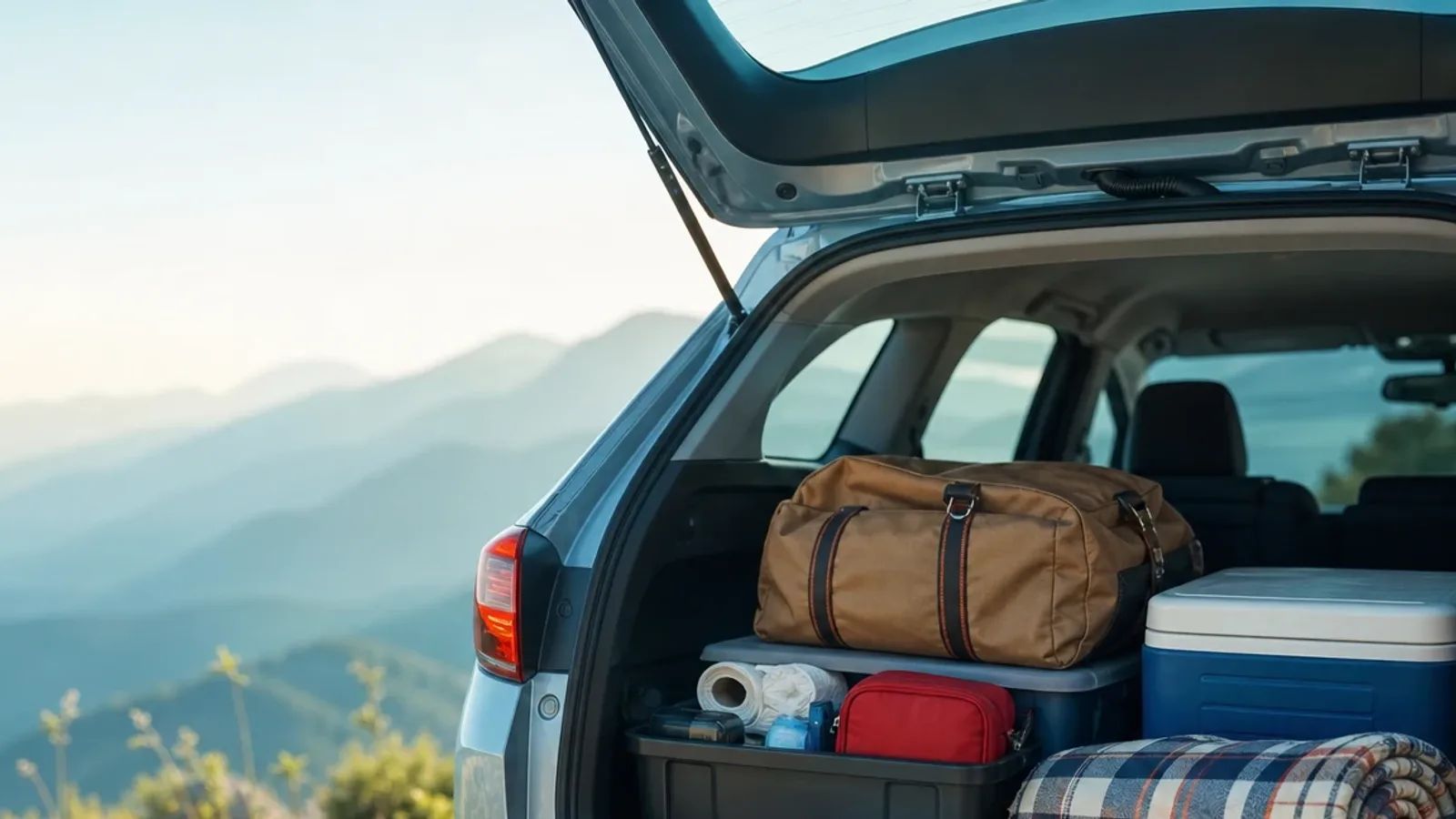
The road trip essentials for a first big drive fit into five groups: a car emergency kit, a quick check of the car itself, your documents and money, food and water, and the comfort and fun stuff that makes ten hours in a seat feel easy. Pack the safety items first, because they are the ones you can’t buy at the next exit when something goes wrong. Everything else is about making the drive cheaper, calmer and more fun.
Here is the short version, then the details for each group.
| Group | Must-haves | Nice to have |
|---|---|---|
| Car emergency kit | Jumper cables, reflective triangle or flares, flashlight, first aid kit, blanket, phone charger | Ice scraper and sand or cat litter for winter |
| Car check | Tire pressure, oil, lights, wipers and washer fluid, brakes | A full mechanic check before a long trip |
| Documents and money | License, insurance card, registration, a card and some cash | Paper copies of key documents in a waterproof pouch |
| Food and water | Refillable bottles, a gallon jug, easy snacks | Small cooler with lunch for day one |
| Comfort and fun | Layers, pillow, sunglasses, playlists and podcasts | Paper map, travel games, a small trash bag |
The car emergency kit: road trip essentials you hope you never use
Ready.gov, an official preparedness site of the Department of Homeland Security, suggests keeping an emergency supply kit in the car in case you get stranded. Its car safety page lists these extras:
- Jumper cables
- Flares or a reflective triangle
- An ice scraper
- A car cell phone charger
- A blanket
- A map
- Cat litter or sand, for better tire traction
Ready.gov’s winter weather page adds a flashlight, warm clothes, bottled water and non-perishable snacks to the car kit, and its general “Build A Kit” checklist includes a first aid kit, extra batteries, a whistle to signal for help, local maps, and a cell phone with chargers and a backup battery.
Put the whole kit in one bin or duffel bag in the trunk so it doesn’t roll around, and check it once a year. Ready.gov’s kit page recommends replacing expired items and rethinking your needs every year.
What a first-timer often forgets: a phone charger that actually fits your car, and a paper map. If you lose signal or your navigation app won’t load, a map in the glove box keeps you moving.
Check the car before you leave
A road trip is the longest your car will work without a break, so give it a once-over a few days before you go. That leaves time to fix anything you find.
Ready.gov suggests having a mechanic check these items before an emergency, and the same list makes a great pre-trip check:
| Item | Why it matters on a long drive |
|---|---|
| Battery and ignition system | A weak battery is easier to replace at home than at a gas station far from town |
| Brakes | Long downhill grades and heavy loads ask more of them |
| Oil | Long highway miles add up quickly |
| Antifreeze levels and thermostat | Keeps the engine from overheating or freezing |
| Heater and defroster | You need a clear windshield in cold or rainy weather |
| Lights and flashing hazard lights | Night driving, and being seen if you pull over |
| Windshield wipers and washer fluid | Bugs, dust and rain on the highway |
| Exhaust system, fuel and air filters | Part of the same checklist from Ready.gov |
Two things you can do yourself in the parking lot:
- Tire pressure. FuelEconomy.gov, a site administered for the Department of Energy and the EPA, says you’ll usually find your car’s correct pressure in the owner’s manual and on a sticker, either inside the glove box or on the door jamb by the driver’s seat. It warns not to use the maximum pressure printed on the tire’s sidewall. Under-inflated tires also cost you gas: the site estimates you lose roughly 0.2% of your mileage for each 1 psi your tires are low on average.
- The check engine light. If it’s on, FuelEconomy.gov recommends having the car inspected by a mechanic. Better to find out before you leave than halfway across the state.
Documents, money and the boring-but-important stuff
None of this is exciting, but you’ll notice fast if it’s missing.
- Driver’s license
- Insurance card and vehicle registration
- A credit or debit card, plus some cash for places that don’t take cards
- Hotel, campsite or rental confirmations, saved offline or printed
- Roadside assistance info, if you have it through your insurance or a membership
- An emergency contact written on paper, not only saved in your phone
Ready.gov’s kit checklist suggests keeping copies of important documents, such as insurance policies and identification, saved electronically or in a waterproof, portable container. A zip bag in the glove box works.
If you’re road-tripping with a pet, pack its food, water and leash with the same care. Our post on what to pack in your dog’s backpack for long hikes is a good starting list for a four-legged co-pilot.
Snacks, water and keeping the budget in check
Road trip snacks are half the fun, and buying everything at gas stations adds up quickly. Pack:
- Water. One refillable bottle per person, plus a gallon jug in the trunk for refills and emergencies. Ready.gov’s general emergency kit plans on one gallon of water per person per day.
- Easy snacks. Things that don’t melt, crumble everywhere or need a fork: trail mix, granola bars, crackers, pretzels, apples, clementines, jerky.
- A small cooler for day one, with sandwiches, cheese sticks and cut veggies.
- Napkins, wet wipes and a trash bag. Your car will thank you.
Some ways to spend less on gas, all from FuelEconomy.gov:
- Watch your speed. Gas mileage usually drops quickly at speeds above 50 mph.
- Think twice about a roof box. A large roof-top cargo box can cut fuel economy by 10% to 25% at Interstate speeds of 65 to 75 mph. A rear-mount box or tray costs much less, about 1% to 5% on the highway.
- Pack lighter. An extra 100 pounds in the car can lower MPG by about 1%.
- Don’t idle for long. An idling engine can use between a quarter and a half gallon of fuel an hour. Turn the engine off while you eat or wait.
- Use cruise control on dry highways. It helps keep your speed steady and in most cases saves gas.
Comfort and entertainment for long hours in the car
This is where you can make the drive feel like a trip instead of a commute.
- Layers. The car can be cold with the AC on and warm in direct sun. A hoodie and a light jacket cover most of it.
- A travel pillow and a blanket for whoever isn’t driving (the kit blanket can double as this).
- Sunglasses for the driver, and a sunshade for the windshield when you park.
- Downloaded playlists, podcasts and audiobooks. Download before you leave so a dead zone doesn’t end the story.
- A car phone mount so the driver isn’t holding the phone for directions.
- Travel games for stops and campsites: a deck of cards, a road trip bingo sheet you print at home.
- Comfortable shoes you can slip on and off at rest stops.
Planning to camp along the way? Read about Shelby’s first solo road trip in the camper, from storms to a door that almost came off on the highway. It’s a good reminder to leave extra time and keep a flexible plan.
Weather and safety on the road
A packing list only goes so far. A few safety habits from Ready.gov’s car safety and winter weather pages are worth knowing before a long drive:
- Check the forecast and road conditions before you leave and along the way, and in bad weather drive only if you really have to.
- Keep the tank full. Ready.gov notes that a full tank also keeps the fuel line from freezing in cold weather.
- Never drive into flooded roads. Just six inches of water can make a car stall or lose control, and many cars will float in a foot of water.
- Turn off cruise control on slippery, icy or snowy roads. If you lose traction, cruise control keeps trying to hold your speed and can make the wheels spin faster.
- If the car gets hard to control, pull over, stop and set the parking brake.
- If you’re stuck in a winter storm, stay inside the car.
Printable road trip checklist
Copy this into your notes app or print it out the night before:
- Emergency kit in the trunk: jumper cables, triangle or flares, flashlight, first aid kit, blanket, extra batteries, whistle
- Phone charger for the car and a backup battery
- Paper map of the route
- Ice scraper and sand or cat litter (for a winter trip)
- Tire pressure set to the door jamb sticker, oil, lights, wipers and washer fluid checked
- License, insurance card, registration, card and some cash
- Copies of documents in a waterproof pouch
- Refillable bottles and a gallon of water
- Snacks, small cooler, napkins, wipes and a trash bag
- Layers, pillow, sunglasses, comfortable shoes
- Downloaded music, podcasts and offline maps
- Full tank of gas and a weather check before you pull out
For more trip ideas, browse the adventure topic hub. If a concert is the reason for the drive, our guide on what to wear to a concert covers venue bag rules and outfits, and our 10 festival hacks help with long days outside.
FAQ
What are the most important road trip essentials?
The safety items: an emergency kit with jumper cables, a reflective triangle or flares, a flashlight, a first aid kit, a blanket and a car phone charger, plus water and snacks. Add your license, insurance card and registration, and make sure the car has been checked before you go.
What should I check on my car before a road trip?
Battery, brakes, oil, antifreeze, heater and defroster, lights and hazard lights, wipers and washer fluid. Set tire pressure to the number on the sticker in the driver’s door jamb or in the owner’s manual, not the maximum on the tire sidewall, and get any check engine light looked at.
What should be in a car emergency kit?
Ready.gov lists jumper cables, flares or a reflective triangle, an ice scraper, a car cell phone charger, a blanket, a map, and cat litter or sand for traction. Its winter page adds a flashlight, warm clothes, bottled water and non-perishable snacks.
How much water should I bring on a road trip?
Bring a refillable bottle for each person and an extra gallon jug in the trunk. For an emergency kit, Ready.gov plans on one gallon per person per day.
Is a roof cargo box worth it?
Only if you really need the space. FuelEconomy.gov says a large roof-top box can cut fuel economy by 10% to 25% at Interstate speeds, while a rear-mount box or tray costs only about 1% to 5% on the highway. Take it off when the trip is over.
Do I need a paper map if I have my phone?
It’s a smart backup. Ready.gov includes a map in both its car kit and its basic emergency kit, and a paper map still works when there’s no signal or your phone battery dies.
From the archive
- What to pack in your dog’s backpack for long hikes + backpacking trips
- I took my first solo road trip in the camper. It was a struggle.
- Why social media helps more girls become badass skaters
More in Adventure & Travel.
Sources
- Ready.gov: Car Safety
- Ready.gov: Build A Kit
- Ready.gov: Winter Weather
- FuelEconomy.gov: Keeping Your Vehicle in Shape
- FuelEconomy.gov: Driving More Efficiently